
The heliport
London Heliport, Battersea
A CAA-licensed aerodrome on the Thames, with its platform built out over the river. Everything here is taken from the heliport's own documents and the UK AIP.
CAA licensed aerodrome (Ordinary Category)' with a local Air Traffic Service and Category H2 rescue and fire fighting; H3 with 24 hours prior notice. The heliport sits on the south bank of the Thames between Wandsworth Road Bridge and the Cremorne railway bridge, and its platform extends over the tidal river. It is the helicopter base used for private and corporate flights into central London.

What it is
- Operator
- UK AIP lists the operator as The London Heliport Ltd (company no. 04546128, registered office Millbank Tower, 21-24 Millbank SW1P 4QP per the Conditions of Use). Reuben Brothers named as owner since 2012 on the heliport's history page. Source
- Licence
- 'CAA licensed aerodrome (Ordinary Category)' with a local Air Traffic Service and Category H2 rescue and fire fighting; H3 with 24 hours prior notice. Source
- Position
- UK AIP EGLW: ARP 512812N 0001046W, '3 NM South West of Westminster Bridge', elevation 17.90 ft (data effective 23 Apr 2020 AIRAC; check current AIP). Source
- Platform
- FATO is raised on concrete piles and extends over the tidal Thames; operations treat it as an 'elevated' heliport for most opening hours (Conditions of Use s3.1). Source
- Stands and marking
- AIP AD 3.8/3.9: four stands (1-3 about 19.98 m diameter, stand 4 25.04 m), not all usable simultaneously; main taxiway 20 m wide; FATO 02/20 with yellow circular TLOF, 11.4 m aiming point diameter, marked '16t' maximum mass. Source
- Aircraft accepted
- Operator says most commercial and military helicopter types are permitted; the fees schedule lists helicopters from Robinson R22 to Chinook, AW101, S-92 and Sea King (Group 5 may be restricted to the landing platform only). Source
Hours, curfew and limits
- Hours
- Permitted hours 07:00-23:00 seven days; normal hours 07:30-19:30 Mon-Fri and 08:00-18:00 weekends and bank holidays; extensions by prior arrangement. Source
- Curfew
- No flights between 23:00 and 07:00 except emergencies (technical, medical, national). Overnight arrivals on the ground by 22:55, engine noise ceased by 22:59; departures airborne by 22:45 (Conditions of Use s1.3-1.4). Source
- Movement limits
- Planning permission caps movements at 80 a day and 12,000 a year (excluding emergency and military). Latest published actual annual figure found: over 10,500 in year to 31 Mar 2016. No more recent figure found. Source
- Noise abatement
- 'Fly Neighbourly' policy: circuit height 1,000 ft amsl, take-off/approach offset 15 degrees away from the shoreline, no manoeuvres below 500 ft except climb-out/approach, ground running guide maximum 5 minutes, APU max 20 minutes (Conditions of Use s3.26). Source
- Thames routes and circuit
- Circuit is a dumbbell over the river, normal pattern between Battersea and Wandsworth road bridges; extended pattern between Chelsea Bridge and Putney railway bridge with ATC permission. ATC may send aircraft north or south side of the river for separation (s3.19, 3.22). Source
- Airspace
- Heliport ATZ radius 2 nautical miles; London Control Zone is Class D; NATS manages traffic outside the ATZ; helicopter routes date from the 1970s and lowest route height is 500 ft above ground. Source
- Weather minima
- Heliport met visibility 1000 m or more and cloud ceiling 600 ft agl or more; routeings via the Local Flying Area (twin-engine only) need 3 km flight visibility (s3.18). Source
Operating rules, fees and hours change. Read the heliport's current Conditions of Use and its opening times page before you plan anything.
Services on site
- Fuel
- Jet A-1 only, gravity-fed system; AIP says 2 pumps and tanks totalling 36,360 litres; Avgas not available; AL48 additive not included. Source
- Customs and immigration
- Certificate of Agreement aerodrome with no permanent border agency presence; GAR needed 2 hours (EU) or 12 hours (Common Travel Area) before arrival or departure; AIP says available by prior arrangement. Source
- Handling and passengers
- Air-conditioned departure lounge, airside escort and baggage handling, complimentary Wi-Fi, refreshments, VIP room for 5-10 people, drop-off area at front of building. Source
- Security
- Access controlled with ID checks; manifest of all passenger and crew names required per movement; site-wide CCTV monitored 24/7; passport needed for international flights. Source
- Emergency and public services
- Free access for emergency flights; serves HEMS, Metropolitan Police, armed forces, ministerial flights and US military. Source
- Airport transfer times
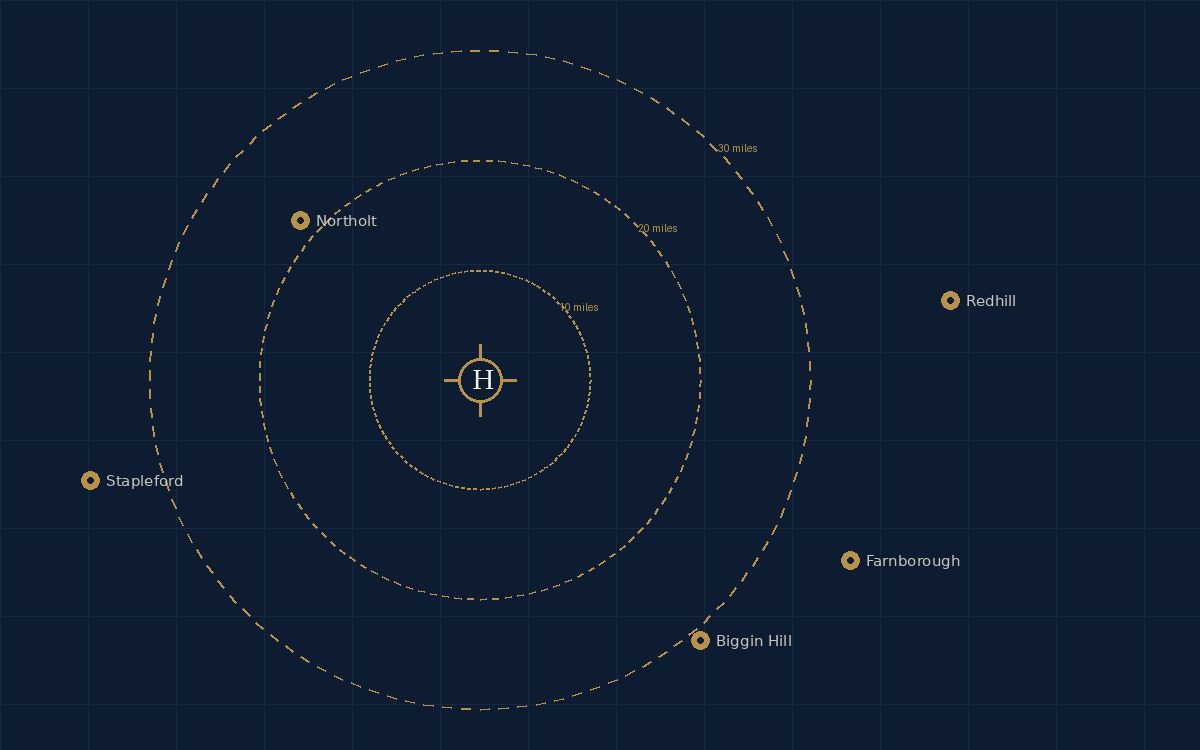
- Operator lists transfer times: Heathrow 10 min, Biggin Hill 10, Gatwick 20, Luton 20, Farnborough 20, Oxford 22, Stansted 22. Not stated whether flight or door-to-door. Source
- Drones
- Flight restricted zone active H24 for all drones including small toys; permission needed, 48 hours notice, ATC clearance at least 20 minutes before launch. Source
- Cranes
- Cranes 10 m or more above surroundings within 6 km of the heliport must be notified, ideally a month ahead; cranes over 300 ft also go to the CAA. Source
Did you know
- Hundreds of thousands
- The 500,000th movement came at the end of 2015, about 56 years after opening. Source
- Interlining
- About 20% of movements in 2015/16 were connections with business jet flights, via Stansted, Luton, Oxford and Farnborough. Source
- Only licensed
- The heliport describes itself as the capital's only CAA-licensed heliport, and since 1985 the only one serving the City. Source
- Built over the river
- The landing platform stands on concrete piles over the tidal Thames, so pilots must avoid overflying shipping within 100 m of it (CoU s3.20). Source
- Emergency flights are free
- The heliport offers free access for all emergency situations. Source
- Slot-based
- A normal landing slot is a maximum 15 minutes, and arrivals more than 10 minutes early can be held outside the London Control Zone. Source
- Radio failure
- A helicopter with radio failure holds on the north side of the river and awaits visual light signals from the tower (CoU s3.21). Source
- Go-around
- If no landing clearance by the final 200 m, pilots go around: turn left on runway 02 or right on 20 and climb to 500 ft over the north bank (s3.23). Source
- Olympics
- It had an exemption from the 2012 Olympics no-fly zone for VIP access. Source
- Waterloo helicopters
- A BEA helicopter shuttle from Waterloo Air Terminal in 1955-56 carried 3,822 passengers before closing about ten months after opening (ianvisits, secondary source). Source
- Planning limits
- The permission dating from the 1970s GLC era means 12,000 movements a year (about 33 a day on average) against an 80-a-day cap. Source
- Three boroughs
- The noise study covering Wandsworth, Hammersmith and Fulham, and Kensington and Chelsea was described by Wandsworth as the first of its kind in the UK. Source
- Drone fees
- Drone permission inside the ATZ and circuit costs GBP 120. Source
Keep going: the heliport's history, how to get there and its conditions of use and fees.
Battersea and the surrounding airfields
Sources and checks
Facts on this page come from these sources, last checked 2026-11-03. Where a source could not be reached or did not say, we left the fact out.
- London Heliport (official site) londonheliport.co.uk
- London Heliport Conditions of Use, Issue 5 londonheliport.co.uk
- londonheliport.co.uk londonheliport.co.uk
- londonheliport.co.uk londonheliport.co.uk
- UK AIP EGLW (2020 AIRAC copy; check the current AIP) aurora.nats.co.uk